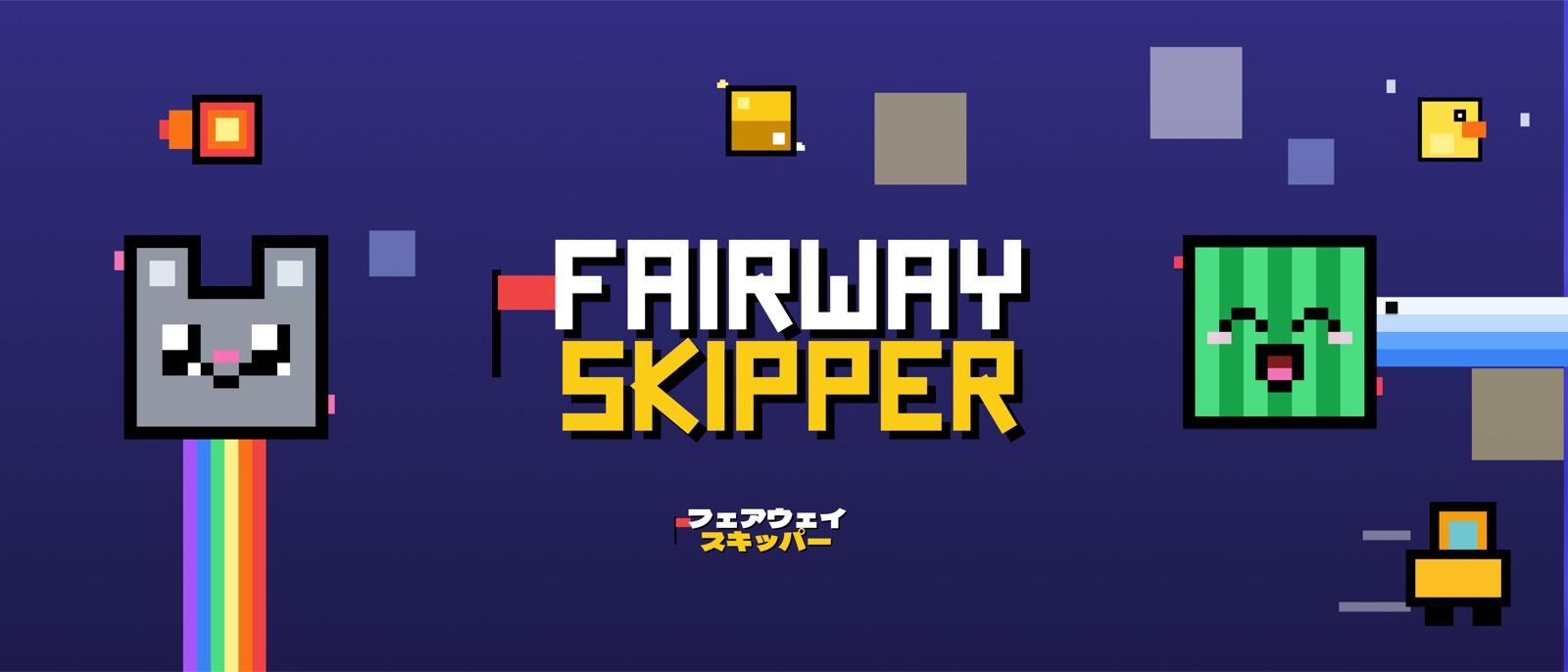
Every golfer knows the famous tradition on the par-3 16th pond during practice rounds at Augusta: players step up to the edge of the water and try to skip a golf ball across the surface, up the bank, and onto the green. We wanted to capture that fun, arcade challenge in a fast-loading browser game: Fairway Skipper World Tour.
In the past, building a custom browser mini-game for a brand campaign often took weeks of specialist scripting and illustration, making it hard to justify for smaller marketing budgets. Inside our AI & Technology lab, we built Fairway Skipper World Tour to explore how AI tools can support our design and development process — helping a small studio team iterate and polish an interactive idea in a fraction of the usual time.
Inspired by Golf’s Famous Water-Skipping Shot
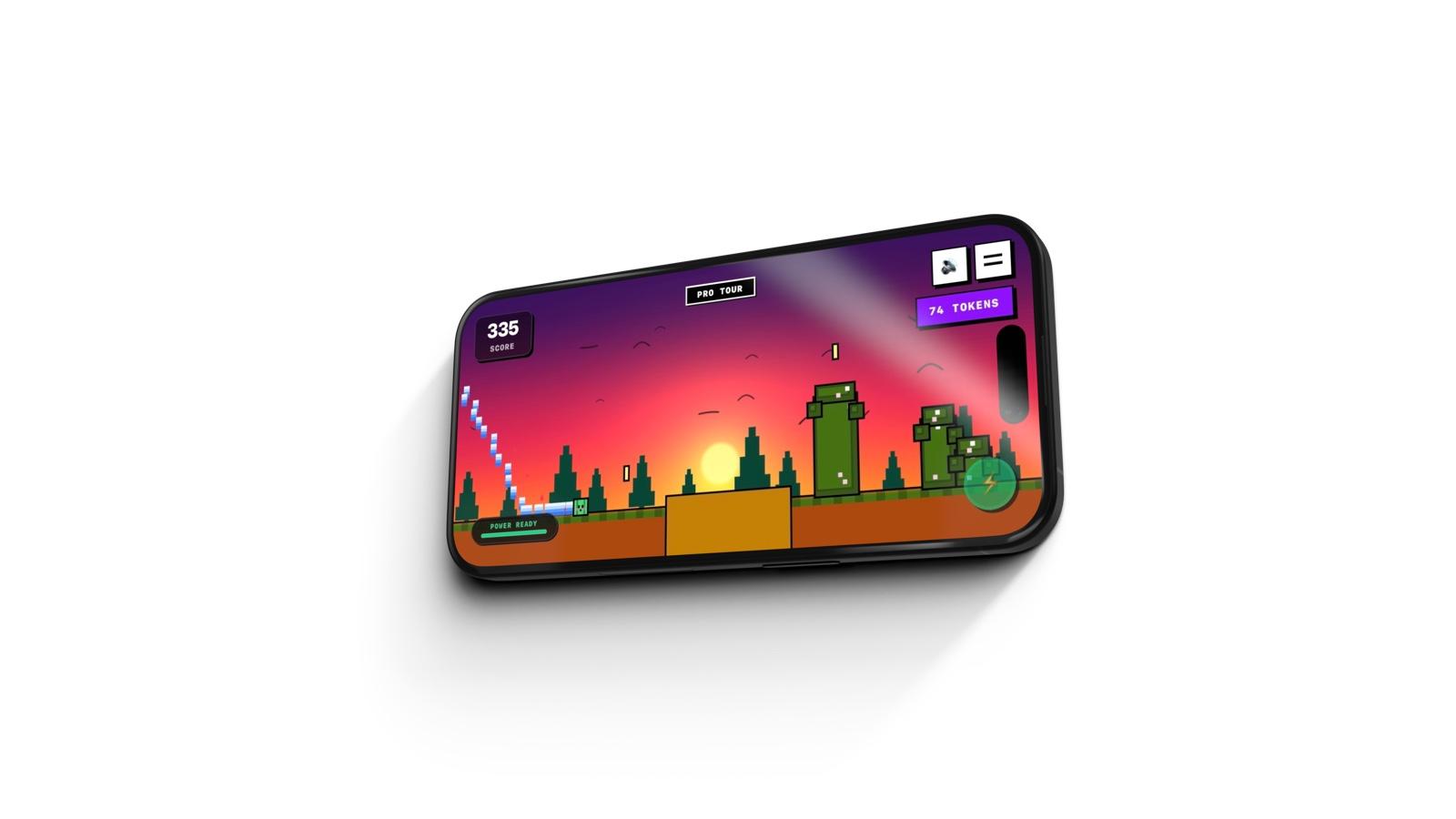
The aim of Fairway Skipper World Tour is simple enough to pick up in seconds:
- Timing Angle & Power: Players choose their loft angle and strike power. Too steep and the ball sinks into the water; too shallow without enough speed and it falls short of the bank.
- Skimming Across the Hazard: A cleanly struck shot skips across the water surface in a chain of bounces before climbing onto the green.
- World Tour Stages: Each stage introduces different water widths, wind conditions and pin positions.
How AI Helped Us Tune the Water-Skipping Physics Faster
For a simple arcade game to feel enjoyable to play, the ball movement has to feel natural and responsive. Rather than relying on heavy game engines that take ages to download on mobile, we wrote the game loop in lightweight TypeScript and HTML5 Canvas.
Here is where AI genuinely helped our development process:
- Testing Physics Equations Quickly: Working alongside Claude and Gemini, we could rapidly test and refine the mathematical formulas governing gravity, backspin lift, water entry angles and bounce friction.
- Rapid Tweaking & Debugging: Instead of spending days manually writing boilerplate test sliders, AI helped us spin up live tuning controls so we could adjust the “feel” of the bounce by eye.
- Lightweight Web Audio & Visual Polish: Our developers then focused on the details that make a game satisfying — crisp impact sounds, water splash ripples, and smooth 60fps mobile performance.
| Area | Traditional Campaign Game Build | AI-Assisted Studio Workflow | Benefit |
|---|---|---|---|
| Physics & Logic Iteration | Weeks of manual trial-and-error scripting | Developer-led coding supported by AI mathematical modelling | Much faster path to a fun, playable prototype |
| Visual Concepting | Slow early moodboarding before any code is written | Rapid AI concepting refined and layered by our designers | Clear visual direction from day one |
| Mobile Performance | Heavy 25MB+ downloads that mobile visitors abandon | Lightweight HTML5 Canvas code that loads in under a second | Embeds cleanly into any WordPress page or campaign landing page |
Combining Human Art Direction with AI Concepting
AI on its own doesn’t know what makes a layout cohesive or a game enjoyable to play. On Fairway Skipper, AI acted as a fast sketching partner for course backdrops and level variations, while our studio handled the typography, interface layout, and browser optimisation so the whole experience runs smoothly on a phone.
Whether we are building a custom WordPress website or an interactive campaign piece, our philosophy is the same: use AI behind the scenes to remove repetitive legwork so we can spend more time on design quality, user experience, and clean code.
Why Lightweight Browser Experiences Work Well for Brands
Because AI helps reduce production time on interactive experiments, adding a playful interactive feature or mini-game to a product launch or WordPress campaign page is far more accessible than it used to be. If you are planning a new custom WordPress website or want to discuss an interactive digital project, get in touch with our Liverpool studio.