Few sectors struggle harder to explain what they actually do online than B2B technology, SaaS, cybersecurity and data privacy companies. Product teams spend years solving intricate engineering, compliance or workflow problems, yet a prospective buyer landing on the marketing website is often met with abstract three-dimensional shapes, vague slogans about digital transformation, and navigation that hides the practical answers needed to shortlist a vendor.
When a Chief Information Security Officer, Data Protection Officer, Head of HR or Operations Director evaluates software, they do not arrive looking for buzzwords. Within the first ten seconds on a page, they need to understand what problem your platform solves, who it is built for, how it sits alongside their existing stack, and whether your organisation operates to the security and governance standards their procurement team expects. At Ambos Digital’s Tech & SaaS practice in Liverpool, our custom web design work focuses on turning that technical complexity into crisp, confident buyer journeys.
Why Enterprise Buyers Abandon Unclear Tech & SaaS Websites
In consumer retail, a slick visual impression can carry a purchase over the line in seconds. In B2B software, cybersecurity and privacy technology, the buying committee is cautious, time-poor and accountable to colleagues. Even the most capable software product loses momentum when its public website creates friction during early evaluation.
Across audits of scaling UK software firms and established enterprise vendors, the same structural weaknesses appear repeatedly:
- Inside-Out Messaging Instead of Buyer Outcomes: Headlines written around internal feature names force visitors to decode what the software does. Without plain-English positioning at the top of the page, busy evaluators close the tab before reaching your product detail.
- One-Size-Fits-All Navigation: Enterprise software rarely serves a single persona. A privacy leader checking consent governance has different priorities from an engineering lead checking deployment friction or a finance director assessing commercial ROI. Generic site structures lump everyone onto one broad overview page.
- Over-Engineered Animations That Hurt Responsiveness: Many tech brands reach for heavy off-the-shelf SaaS themes packed with autoplay scripts, bloated slider libraries and oversized motion bundles. Rather than looking cutting-edge, the website stutters on corporate laptops and stalls over mobile connections.
- Buried Credibility Signals: Security accreditations, UK or EU data residency commitments, customer case studies and approachable leadership profiles are frequently hidden three clicks deep—precisely where technical reviewers expect immediate transparency.
Structuring Product, Solution & Compliance Pages Without Jargon
A high-performing B2B software website treats clarity as a commercial advantage. Instead of asking visitors to read dense white papers just to grasp your core proposition, bespoke websites organise information around how real buying committees research and shortlist platforms.
Three structural pillars consistently lift both engagement and demo quality for tech, SaaS and data privacy organisations:
- Dedicated Role & Industry Solution Pathways: Group your offering clearly by buyer role (such as Compliance & Privacy Teams, IT Security, or People & Operations) and by regulated sector (Financial Services, Healthcare, Retail, or Public Sector). Each pathway should open with the operational bottleneck the team faces before mapping how your software resolves it.
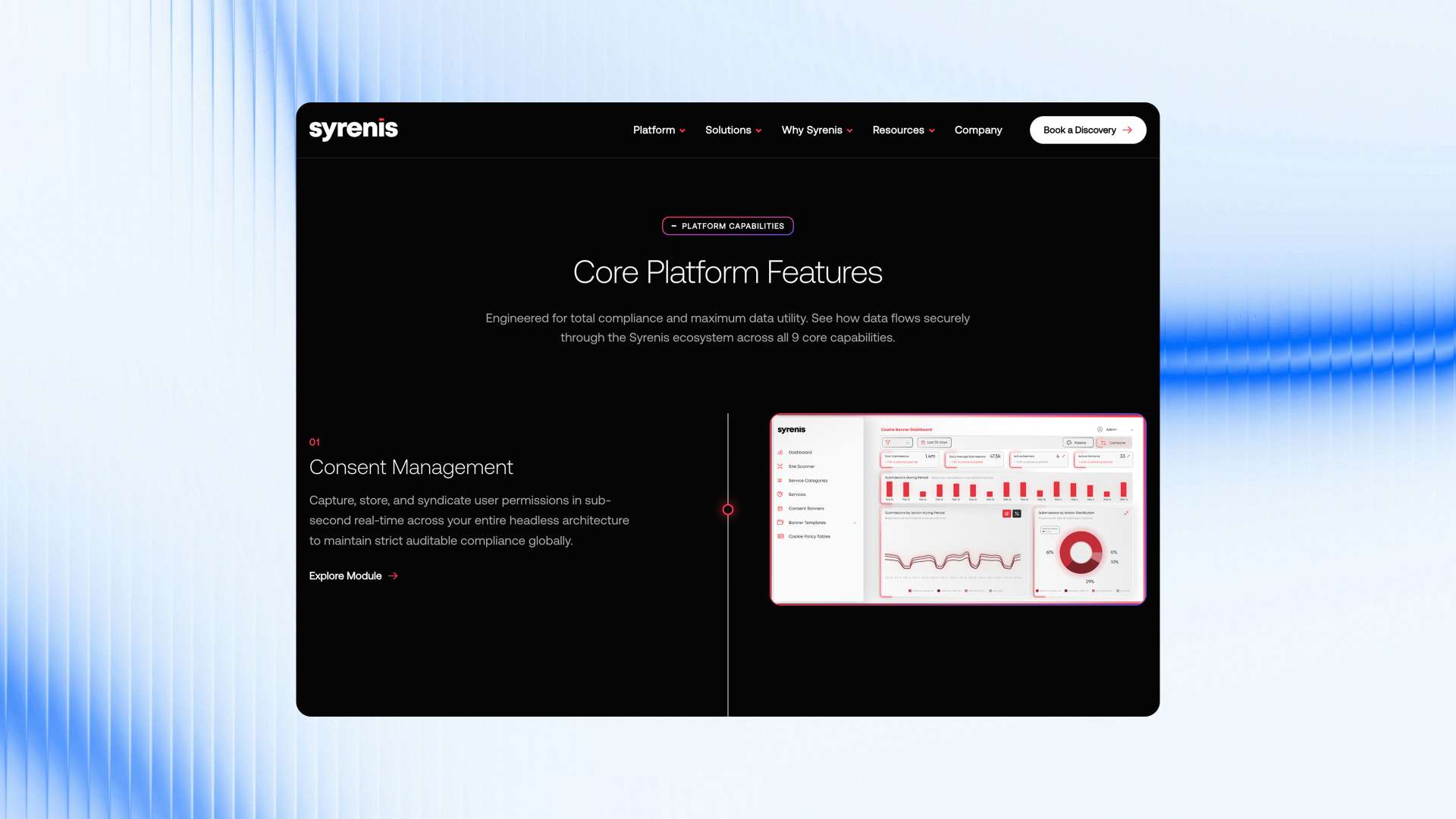
- Layered Product Architecture: Introduce core capabilities with concise summaries and clean interface visuals first, then offer structured tabs, specification strips or downloadable technical briefs for evaluators who want architectural depth. Keeping product messaging modular prevents homepage bloat while giving technical buyers concrete substance.
- Visible Security, Privacy & Governance Signposting: For cybersecurity and data privacy companies, credibility starts with the details. Dedicated trust strips and clear links to security documentation—covering ISO 27001, Cyber Essentials Plus, SOC 2 alignment, GDPR compliance and UK data hosting—reassure procurement teams early in the funnel without cluttering your primary headline.
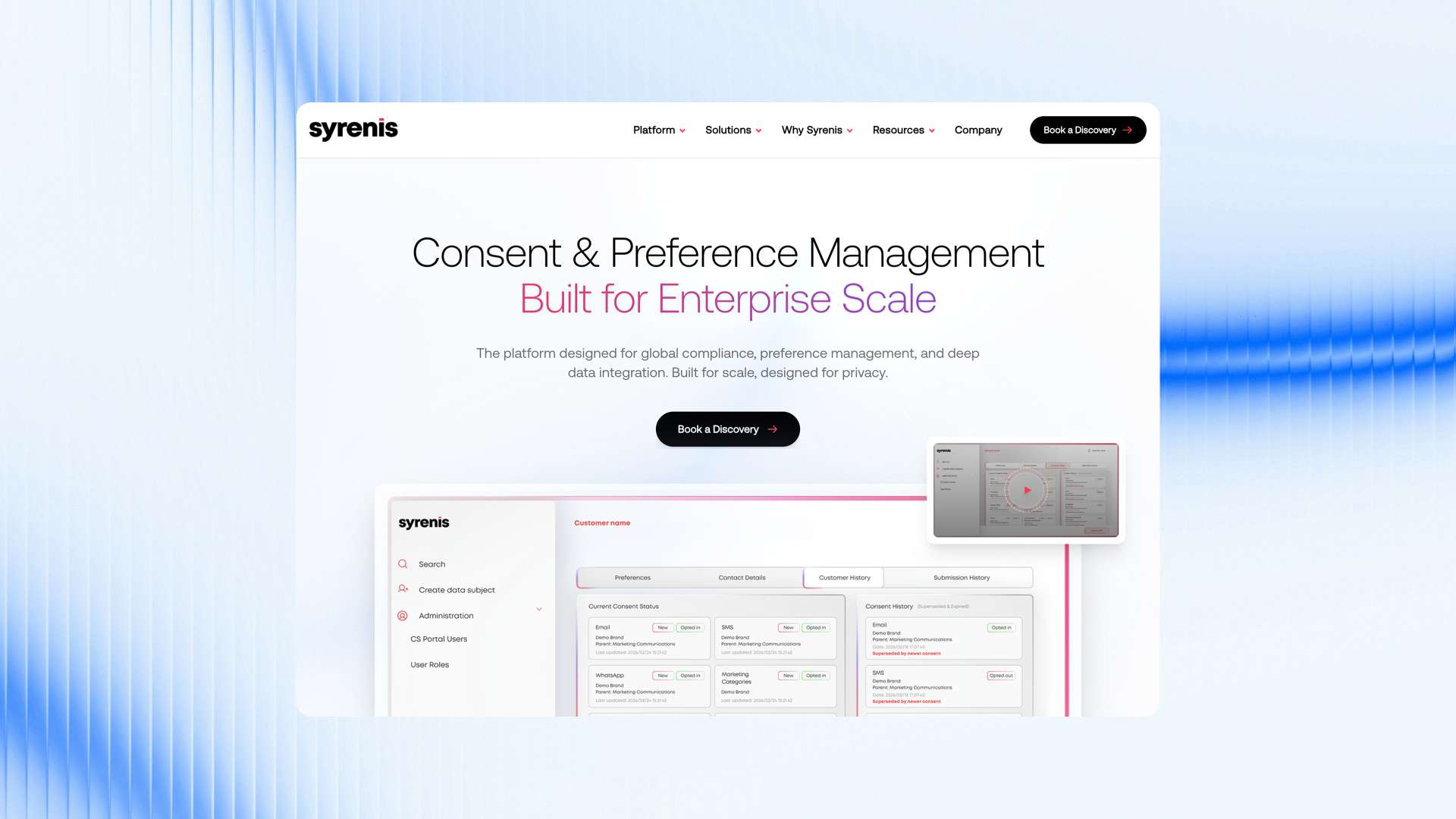
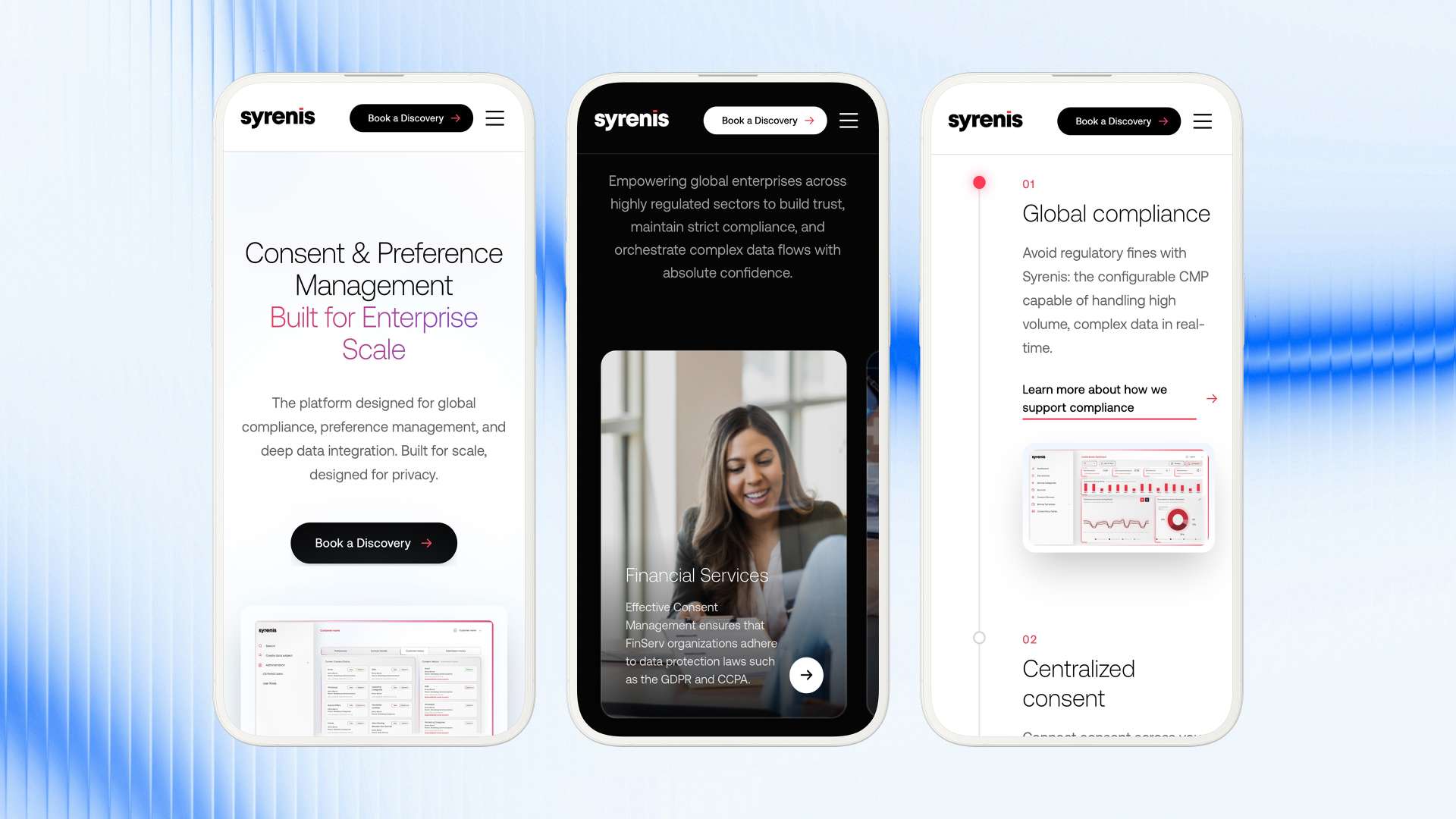
When we partnered with consent and preference management pioneer Syrenis, the priority was streamlining their brand and services into a secure, high-performing bespoke website that matched their leadership in data privacy. Alongside our work supporting HR SaaS brands such as OneHR, our experience shows that disciplined typography, clear service architecture and purposeful UI restraint communicate enterprise authority far better than generic template effects.
Performance, WCAG Accessibility & Technical Credibility
For a technology, cybersecurity or data privacy vendor, your marketing website is an implicit demonstration of your engineering standards. If a vendor promising resilient infrastructure or meticulous data governance runs a slow, visually unstable site with broken keyboard navigation or cookie banner misconfigurations, discerning prospects notice immediately.
From our Liverpool studio, our bespoke web development team builds B2B tech websites with the same attention to detail clients expect from enterprise software:
- Lean, Predictable Front-End Code: Avoiding heavy multipurpose page builders keeps page weights low, eliminates layout shift as fonts and interface imagery render, and ensures fast Time to First Byte across both desktop fibre and mobile networks.
- WCAG 2.2 AA Accessibility as Standard: Accessible colour contrast, logical heading hierarchy, clear focus states and screen-reader-friendly navigation are essential for inclusive design—and increasingly mandatory when pitching to public-sector bodies, NHS trusts, universities and FTSE-listed enterprises.
- Resilient Managed UK Hosting: Pairing clean code with managed UK hosting and Cloudflare edge caching keeps your public marketing site fast, hardened and isolated from your core production application environment, ensuring marketing campaigns never compete with product uptime.
Generic SaaS Templates vs a Bespoke Website by Ambos
Early-stage startups occasionally launch on an off-the-shelf SaaS theme to get to market quickly, only to find within twelve months that the template fights every new product tier, integration partner or enterprise security page they try to add. Comparing a standard template against a bespoke build highlights where commercial value is won or lost.
| Area | Typical Off-the-Shelf SaaS Template | Bespoke Website by Ambos | Commercial Impact |
|---|---|---|---|
| Product Positioning | Generic hero slogans and rigid icon grids copied across hundreds of tech startups | Information architecture tailored to your buyer personas, modules and use cases | Prospects quickly grasp what your software does and why it fits their team |
| Visual & Brand Authority | Predictable dark gradients and stock vector illustrations | Custom typography, deliberate whitespace and authentic UI showcase framing | Separates credible enterprise vendors from lookalike early-stage tools |
| Performance & Mobile UX | Bundled third-party scripts and unoptimised asset loaders | Lean semantic HTML, optimised media and UK edge caching | Sub-second perceived loads when links are shared across Teams, Slack or LinkedIn |
| WCAG Accessibility | Low-contrast badges, inaccessible tabs and keyboard traps | WCAG 2.2 AA contrast, semantic structure and keyboard-tested components | Passes enterprise, financial services and public-sector procurement checks |
| Demo & Portal Pathways | Single generic contact form detached from sales workflows | Clean embeds and direct routes into your existing demo scheduler, CRM or portal | Higher-intent qualified leads with less manual triage for sales teams |
| In-House Agility | Fragile visual builders where minor edits break mobile spacing | Structured editorial templates built around your marketing team’s releases | Staff launch new campaign pages, webinars and product guides in minutes |
Frictionless Demo Journeys, Team Credibility & In-House Agility
The best B2B tech websites do not try to replace your sales engineers or reinvent the software tools your business already relies on. Rather than bolting brittle custom middleware onto a marketing site, a bespoke website focuses on guiding qualified visitors smoothly into your existing commercial ecosystem—whether that means embedding your HubSpot or Salesforce demo scheduler, routing enterprise enquiries by region, or linking cleanly to your customer portal, status page and developer documentation.
Equally important is showing the real people behind the platform. Enterprise software agreements are built on long-term partnerships, especially in regulated cybersecurity and data privacy markets. Including concise, approachable profiles of your leadership, security and customer success teams alongside verified client outcomes gives buyers confidence that real specialists sit behind the interface.
Finally, B2B tech marketing moves quickly. Product launches, compliance updates, partnership announcements and industry events require your internal team to publish polished pages without waiting in an agency queue. By structuring custom editorial modules with locked spacing and responsive guardrails, marketing managers can assemble new landing pages, customer stories and technical resources confidently while preserving design integrity across every screen size. If you are planning a new bespoke website for your software, SaaS or cybersecurity business, speak with our Liverpool studio to discuss your roadmap.